



How Ceramic Coatings Are Removed from Gas Turbine Components with the EcoCbooster
How Ceramic Coatings Are Removed from Gas Turbine Components with the EcoCbooster
Gas turbine parts live a hard life. High temperatures, oxidizing gases and heavy mechanical loads are part of every operating hour. To survive that, many hot-section components carry a ceramic Thermal Barrier Coating (TBC), a thin layer that shields the metal underneath from the heat.
Sooner or later, that coating has to come off. During a major overhaul, components are inspected, and their coatings are repaired or renewed completely. Stripping the old ceramic cleanly is the first step to a good recoat.
It is also a step that has caused a lot of headaches over the years. In this article, we look at how ceramic coating removal has traditionally been done, where it falls short, and how a water-based process with the Ecoclean EcoCbooster changes the picture.
Watch the Process in Action
Add this video here:https://www.linkedin.com/posts/surfaceprocessing-coating-energyefficiency-ugcPost-7505648228571205633-OLlV/
Removing ceramic coatings from gas turbine components with the EcoCbooster.
Why Removing a Thermal Barrier Coating Is Not Simple
A TBC is built to stay put under extreme conditions, so taking it off takes real effort. And the job has two sides that pull against each other. The coating has to come off completely, yet the metal underneath has to stay undamaged, because that surface is what the new coating will bond to.
Common methods include:
- Abrasive methods: which grind or blast the coating away
- Chemical methods: which dissolve or break down the ceramic layer
- Manual processing: where operators work the part by hand
Abrasive and chemical routes can have a significant environmental impact and chemicals have to be disposed of afterward. Manual work brings a different problem: it is slow and depends heavily on the person doing it.
A Real Application Example
The application behind this article involved gas turbine components of different sizes and geometries, each needing its ceramic coating selectively stripped during an overhaul.
Before the Ecoclean solution: the process was done by hand. It took several hours per job, the results were often inconsistent, and parts needed additional rework.
After moving to the EcoCbooster: the process delivers a uniform, slightly roughened surface. That is just what you want before recoating, because a surface with the right texture gives the new coating good conditions to bond.
Hours of manual effort turned into a controlled, repeatable process. That is the real value here and any shop that has fought with inconsistent coating removal will recognize it.
How High-Pressure Water Jetting Removes Ceramic Coatings
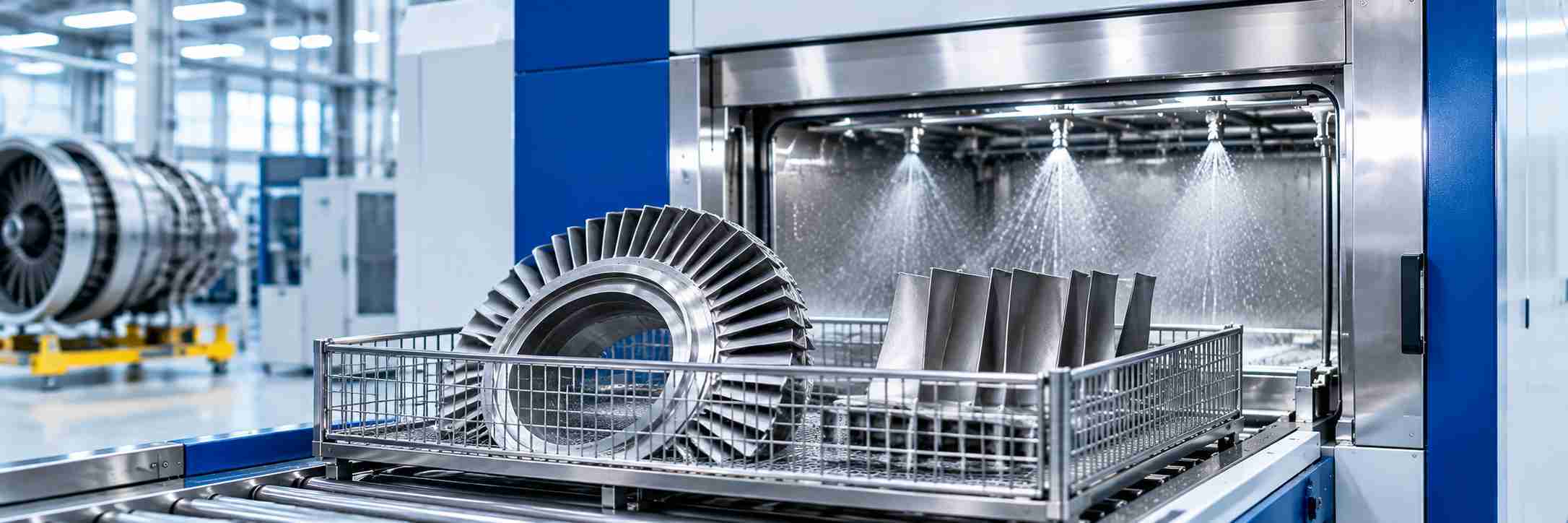
Ecoclean relies on water. High-pressure water jetting is a particularly gentle form of surface processing, because there is no abrasive grit and no aggressive chemistry involved.
At pressures above 2,000 bar, a water jet can remove the ceramic coating right down to the substrate without damaging it. Since only water is used, no chemicals have to be disposed of afterward.
But raw pressure is not the whole story. Precise control of the jet is what decides the result. Only with tight control can the coating be removed layer by layer in a uniform and controlled way, rather than blasted off unevenly.
The EcoCbooster: High Abrasive Effect at Lower Pressure
Conventional high-pressure water jetting gets its power from very high pump pressure, which demands a lot of energy and equipment. With the EcoCbooster, Ecoclean developed a system that achieves a high abrasive effect at significantly reduced pump pressure.
Key advantages over conventional high-pressure water jetting:
- Maximum operating pressure of 800 bar
- Significantly reduced energy use and consumable requirements
- Lower water filtration requirements
- Process water treatment and recirculation
- Precise, repeatable processing without damaging the substrate
Lower pressure means less strain on pumps and components, less energy per part and fewer consumables to replace. Treating and recirculating the process water also keeps water use and waste in check.
Process Control: Why the Results Stay Consistent
A good result once is nice. A good result on every part is what a production line needs. The EcoCbooster process gets there through continuous monitoring and software control.
Three parameters are watched throughout the process:
- Nozzle-to-part distance
- Feed rate
- Rotary table speed
Ecoclean-developed software keeps these conditions stable from start to finish.
Nozzle wear is compensated automatically: As a high-pressure nozzle wears, its output changes. The system adjusts the high-pressure pump speed to make up for it, so pressure and processing conditions stay constant.
Setup is simple for the operator: Only the key part dimensions need to be entered and the system adjusts itself to the part. This matters a great deal when you handle components of different sizes and shapes, as in a turbine overhaul.
Where This Process Fits
The same approach suits shops working on:
- Gas turbine overhaul and repair
- Selective stripping of ceramic coatings on components of different sizes and geometries
- Surface preparation ahead of recoating
- Operations that want to cut chemical use and disposal
Every application has its own demands, so it is wise to talk through the part, the coating and the target surface before settling on a process.
Talk to Our Surface Processing Experts
If you are still stripping ceramic coatings by hand, or you are not happy with the consistency of your current process, it is worth a conversation. At Ecoclean, we work with customers on projects as varied as their parts, and we can help you find out whether the EcoCbooster fits your application.
Discuss Your Coating Removal Application |Explore Surface Processing Solutions |Request a Consultation
Call:- +1 947 272 0600
Email:- info.usa(at)ecoclean-group.net
Website:- ecoclean-group.us
Final Thoughts
Removing a ceramic coating should not mean hours of manual work, inconsistent results and chemical waste. With a water-based, software-controlled process like the EcoCbooster, you get a clean substrate, a surface ready for recoating and a process you can repeat.
Have a gas turbine component that needs its coating stripped?
Frequently Asked Questions
1. What is a thermal barrier coating (TBC) on a gas turbine component?
A. A TBC is a ceramic layer applied to hot-section turbine components. It protects the metal underneath from extreme temperatures and oxidizing conditions. During a major overhaul, the coating is inspected and then repaired or completely renewed as needed.
2. Why not remove ceramic coatings with abrasive or chemical methods?
A. They are commonly used, but they can have a significant environmental impact, and chemicals have to be disposed of afterward. Water-based processing avoids chemical disposal, and with proper control it removes the coating down to the substrate without damaging it.
3. How does the EcoCbooster differ from conventional high-pressure water jetting?
A. Conventional jetting removes ceramic at pressures above 2,000 bar. The EcoCbooster reaches a high abrasive effect at a maximum operating pressure of 800 bar. That brings lower energy use and consumable needs, lower water filtration requirements and treatment and recirculation of the process water.
4. Will the process damage the base material of the component?
A. The process is designed for precise, repeatable processing without damaging the substrate. The result is a uniform, slightly roughened surface that is well suited to recoating.
5. How does the system keep results consistent from part to part?
A. It monitors nozzle-to-part distance, feed rate and rotary table speed continuously. Software compensates for nozzle wear by adjusting the high-pressure pump speed, which keeps pressure constant. The operator only enters the key part dimensions and the system adapts to the part.


