






Choosing a Parts Cleaning Machine for General Industry: EcoCcompact, EcoCbase and EcoCvertex
Choosing a Parts Cleaning Machine for General Industry: EcoCcompact, EcoCbase and EcoCvertex
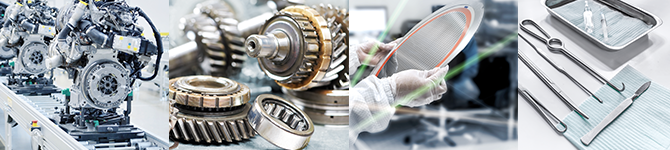
Walk through any general industry plant and you will see the same range of parts: gears, shafts, bearings, housings, stamped and bent components, cast and machined pieces. They all leave production carrying something, whether that is cutting oil, chips, grease or fine particles.
Cleaning them well is rarely about buying the biggest or the newest machine. It is about matching the technology to the part, the contamination and the cleanliness target.
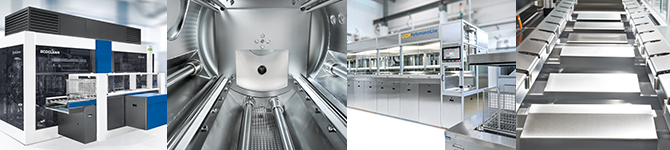
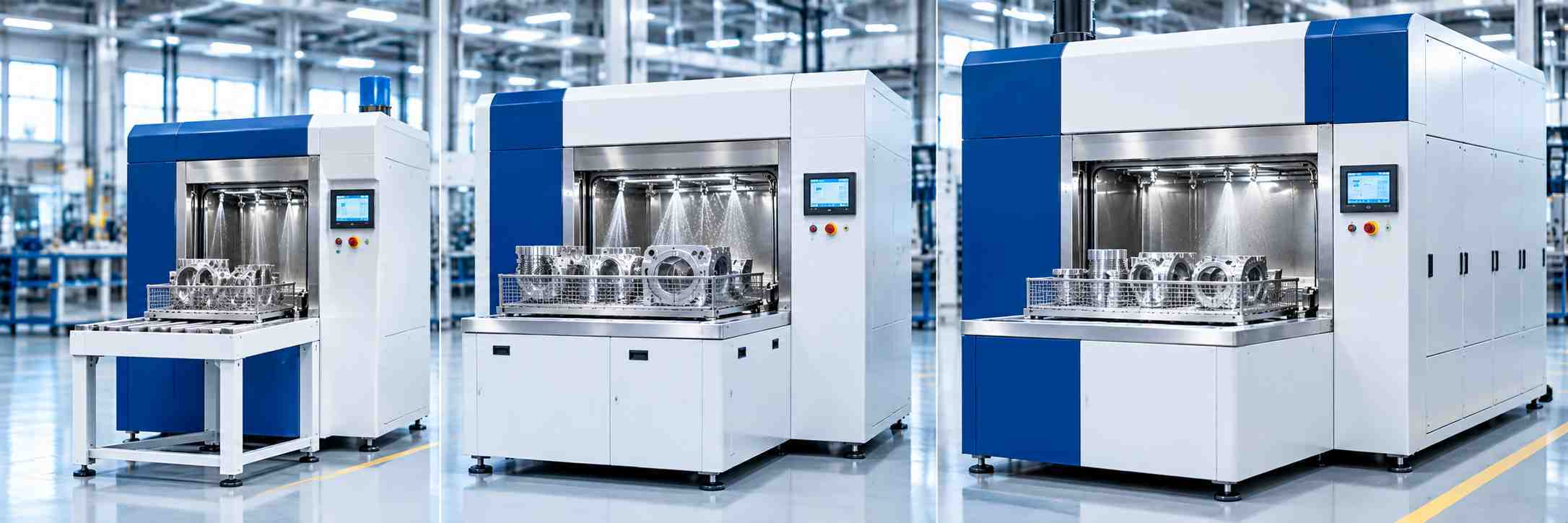
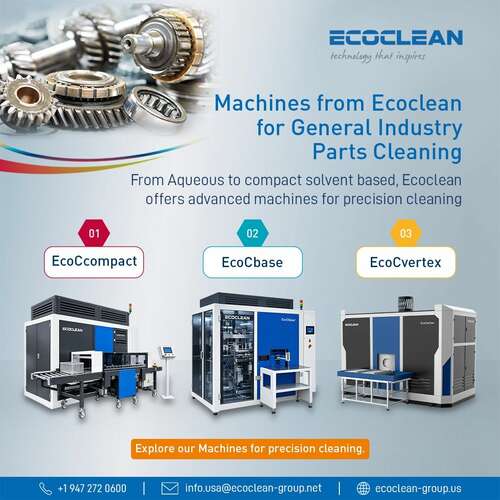
Ecoclean builds machines for exactly this kind of work, from compact solvent-based systems to advanced aqueous ones. In this guide, we look at three of them EcoCcompact, EcoCbase and EcoCvertex and help you work out which one fits your application.
Why the Right Technology Comes First
Precision cleaning starts with the right technology. A system that handles oily machined parts beautifully may be a poor choice for a different contamination or a stricter cleanliness requirement.
Before comparing machines, it helps to settle a few basics:
- What material are the parts made of?
- What contamination do they carry: oil, chips, films or particles?
- How complex is the geometry? Are there blind holes, bores or cavities?
- What cleanliness level is required, and how will you measure it?
- How many parts and in what batch size do you need to clean?
If you want to go deeper on these questions, read our guide to the five factors that decide the right cleaning process.
Solvent or Aqueous: A Quick Orientation
Both approaches work well. The better fit depends on your parts and your plant.
Solvent-based cleaning uses hydrocarbon or modified alcohol media. It suits many oily and greasy contaminations, works with a wide mix of materials and avoids the water use and wastewater disposal that come with aqueous processes.
Aqueous cleaning uses water-based cleaning media and suits applications that call for high cleanliness, rinsing and drying stages and flexible process tanks.
Ecoclean covers both, so the choice can follow the application, not the other way around.
EcoCcompact: Compact, Plug-and-Play Solvent Cleaning
EcoCcompact is a compact solvent cleaning system built for efficient, economical cleaning of general industry parts. It is available in three work chamber sizes giving flexibility for different part sizes and volumes.
What stands out:
- Flexible media: The system can run hydrocarbon or modified alcohol solvents and switching between them does not require modifications.
- Injection flood washing: Frequency-controlled flood pumps handle filling and emptying, and optional rotary drives rotate the parts.
- Optional add-ons:Ultrasonic cleaning and pulsated pressure cleaning (PPC) can be added for tougher jobs.
- Solvent distillation: Integrated distillation keeps the solvent in good condition, with continuous oil discharge.
- Batch weight up to 150 kg.
- Plug and play installation with a compact footprint and low cleaning unit costs.
Typical parts: cast, machined, stamped, bent and other precision components that must meet particulate and film cleanliness standards.
A good fit when: you need high throughput in a compact space and a system that can handle different materials in the same machine.
EcoCbase: An Efficient Entry into Solvent Cleaning
EcoCbase is Ecoclean's entry-level solvent cleaning system, made for smaller capacity requirements. It also works well as a decentralized cleaning station inside a larger plant.
What stands out:
- Compact single-chamber, full-vacuum design: available in S and M versions.
- Several processes in one machine: Steam degreasing, spray and immersion cleaning and injection flood washing can be combined with ultrasonic cleaning, Ultrasonic Plus and PPC.
- Non-halogenated hydrocarbons and modified alcohols: as cleaning media.
- Clean solvent, continuously: Full-flow and bypass filtration plus an integrated distillation unit keep the media in shape.
- Easy installation: including in areas with low ceilings.
- Up to 50 part-specific program slots: so one machine can handle a range of parts.
- Manual loading as standard: with automation available as an option.
Batch sizes: S takes baskets up to 430 x 225 x 200 mm and 50 kg. M takes baskets up to 530 x 320 x 250 mm and 75 kg.
A good fit when: your cleaning volumes are low to moderate, your batches are small, or you want to set up a cleaning cell close to where the parts are made.
EcoCvertex: Advanced Aqueous Cleaning for Demanding Requirements
EcoCvertex is Ecoclean's aqueous cleaning system for parts with stricter cleanliness needs and more complex geometries.
What stands out:
- Spray cleaning for efficient rinsing.
- High-power injection flood washing for complex geometries and critical cleanliness requirements.
- Ultrasonic cleaning with selectable power and frequency, useful for sticky contamination on accessible areas.
- Optional pulsated pressure cleaning for complex geometries and blind holes.
- Drying options. Filtered hot air for standard applications, or vacuum drying for complete dryness, including complex parts.
- Three-tank standard configuration, with an optional fourth flood tank for different component materials, such as spot-free rinsing with deionized water or corrosion protection.
- Moving baskets. Part baskets can rotate 360 degrees, oscillate or index.
- Oil separation and filtration. An integrated oil separator and double filtration support long bath life and lower cross-contamination.
- PLC control with customizable process programs and real-time monitoring on the HMI.
A good fit when: parts must meet cleanliness limits measured by gravimetry and particle size, geometry is complex, or you need a flexible water-based process with a compact footprint.
Side-by-Side: Which Machine Suits Which Need?
EcoCcompact | EcoCbase | EcoCvertex | |
Cleaning type | Solvent | Solvent | Aqueous |
Best for | Compact, higher-throughput solvent cleaning of mixed materials | Entry-level, low-volume or decentralized solvent cleaning | Demanding cleanliness and complex geometries |
Key technologies | Injection flood washing, optional ultrasonic and PPC, distillation | Steam degreasing, spray, immersion, injection flood washing, ultrasonic, PPC, vacuum design | Spray, injection flood washing, ultrasonic, optional PPC, hot air or vacuum drying |
Sizes | Regular, L and XL | S and M | Chamber sized to customer requirements |
Treat this as a starting point. The final choice depends on your part, the contamination and your production setup.
How to Decide: A Practical Approach
Here is what we have seen work well on real projects:
- Define the cleanliness requirement first: Know the limit and how you will measure it.
- Look at your contamination and material mix: This often points toward solvent or aqueous.
- Check part geometry: Blind holes and cavities call for flood washing, pulsated pressure or similar technologies.
- Size for your real volumes: Do not over-buy, and leave some room to grow.
- Test on your own parts: A cleaning trial with original components tells you more than any brochure.
Talk to Our Parts Cleaning Experts
Every application is different. At Ecoclean, we help manufacturers choose the machine, the process and the media that fit their parts and their production.
Not sure whether solvent or aqueous is right for you? Let's talk it through.
Explore Our Parts Cleaning Machines |Talk to an Expert
Call :- +1 947 272 0600
Email: info.usa(at)ecoclean-group.net
Website ecoclean-group.us
Final Thoughts
There is no single best machine, only the one that fits your parts, your contamination and your production. EcoCcompact, EcoCbase and EcoCvertex each cover a different need, and together they give general industry a practical route from compact solvent cleaning to advanced aqueous processing.
Ready to find the right machine for your parts?
Frequently Asked Questions
1. What is the difference between EcoCcompact, EcoCbase and EcoCvertex?
A. EcoCcompact and EcoCbase are solvent-based systems, while EcoCvertex is aqueous. EcoCcompact is a compact, plug-and-play system in L and XL versions. EcoCbase is an entry-level solvent system for smaller capacities. EcoCvertex suits demanding cleanliness requirements and complex geometries.
2. Should I choose solvent or aqueous cleaning for my parts?
A. It depends on the material, the contamination, the geometry and the cleanliness requirement. Solvent systems suit many oily contaminations and mixed materials and avoid wastewater disposal. Aqueous systems suit applications with high cleanliness targets and rinsing or drying needs. A cleaning trial on your parts is the best way to settle it.
3. Which machine is best for a small plant with low cleaning volumes?
A. EcoCbase was designed for that case. It is an entry-level solvent system in S and M versions, and it also works as a decentralized cleaning station inside a bigger plant.
4. Can these machines clean parts with blind holes and complex geometries?
A. Yes, with the right technologies. Injection flood washing is available across the range, and pulsated pressure cleaning is an option on the systems that support it, particularly useful for blind holes and complex shapes. Ultrasonic cleaning can be added for fine or sticky contamination.
5. How do I know the machine will meet my cleanliness requirement?
A. Test on original parts. Cleaning trials combined with cleanliness analysis show what level you can reach and which process parameters work. Our related guide on cleanliness standards, testing and validation explains the steps in detail.


